Your Homeowner’s Guide to Finding and Fixing Plumbing Leaks
November 12, 2025
Plumbing leaks are every homeowner’s nightmare. They waste staggering amounts of water, increase your utility bills, and can cause devastating structural damage and mold growth if ignored.
At John G. Plumbing Inc., we know that quick action is key. We’ve structured this guide to help you manage the emergency, identify common issues, and know exactly when it’s time to call our professional plumbers. When in doubt, give us a call at (250) 797-0858.
What’s in this guide?
When you hear the terrifying sound of rushing water, panic is natural, but immediate action is critical. Stopping the flow of water is the single most important thing you can do to save your home.
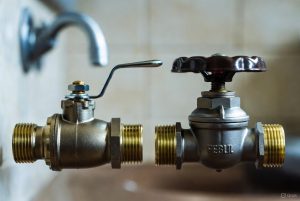
Your absolute first priority is to turn off the water supply.

What is the danger of waiting to repair a leaking pipe? Even a small, slow leak can lead to wood rot, compromised structural integrity, black mold growth, and astronomical, unnecessary water bills. Do not delay professional contact.
If you have a burst pipe or flooding, call John G. Plumbing Inc. immediately. We provide swift, reliable service to prevent major damage across Nanaimo, Parksville, and the surrounding areas.

A persistent drip can be more than just annoying; it can waste hundreds of gallons of water per year. The repair often comes down to the type of faucet you have.
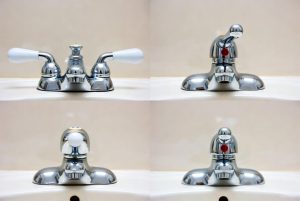
Wondering what kind of faucet you have? Faucets are categorized by their inner mechanism, which dictates the repair part you need. So, how it is built will determine how it will get fixed.

Faucet Type | How to Identify It Easily | The Problem Part (What Needs Fixing) |
|---|---|---|
| Compression (Older Style) | Two Separate Handles (one for hot, one for cold). You must tighten the handle to stop the water, like turning off a garden hose. | Washers (Small rubber rings inside the handles wear out). |
| Cartridge (Common Modern) | Single Handle that moves up/down* for water volume and left/right for temperature. Water stops when you move the handle to the OFF position. | Cartridge (A cylinder with movable ports that controls water flow). |
| Ball (Distinct Design) | Single Handle with a round, ball-shaped cap over the joint. It moves and rotates around the spout. (Usually a difficult, older single-handle design). | Ball Joint Assembly (Multiple small seals and springs inside the mechanism). |
| Ceramic Disc (Newer High-End) | Single wide, flat handle that moves over a wide arc. They are very reliable and typically have a wide, circular base on the spout. | Ceramic Disks (Two polished ceramic plates that control water flow). |
First, turn off the water supply under the sink. Disassemble the handle and spout to access the core mechanism. For compression faucets, you likely need a new washer. For cartridge or disk faucets, you will need a matching replacement cartridge.
If your faucet is old, showing heavy corrosion, or if replacement parts are unavailable or difficult to source, a full replacement is more cost-effective. Sometimes, you just want to update the look!
Schedule a Faucet Installation Estimate with your local plumber in Qualicum Beach or Parksville. Our team can quickly diagnose if a repair is feasible or if you need an upgraded, high-efficiency fixture installed. Call John G. Plumbing Inc at (250) 797-0858. We answer the phone and give an estimate right away for the price and the soonest availability.

A running toilet is the most common and expensive hidden leak in a home. The sound of water constantly refilling the tank is a signal that money is literally going down the drain. And hey, if you have kids, they’ve likely flushed a toy once or twice. So, let’s help you solve this mystery of the day.
The two main culprits in a running toilet are the flapper (the rubber plug) and the fill valve (the mechanism that refills the tank).
The flapper’s job is to create a perfect seal to hold water in the tank until you flush. Take the lid off the back of the toilet. The water inside the tank may look perfectly clean, but it can sometimes look discolored or have build-up depending on your home’s water quality. It’s ok to touch!
Once inside, you’ll see a structure connected to a chain, which then connects to a little seal on the bottom.
The fill valve (or ballcock) is the main control mechanism inside the toilet tank that manages the water supply. Its primary job is twofold: first, it opens to refill the tank immediately after a flush using water from your home’s supply line. Second, and most critically, it uses an attached float (a cup or arm) to monitor the rising water level and automatically shut off the flow when the water reaches the optimal fill line, which prevents the toilet from continuously running and wasting water.
Fill valve troubleshooting:
If you’ve replaced the flapper and fill valve and the toilet still runs, the issue may be more complex. This could indicate a warped or damaged flush valve seat or an issue with the siphon jet. At this point, it’s time for a professional plumber inspection.
A continuously running toilet can waste over 200 gallons of water per day, potentially adding hundreds of dollars to your annual water bill!
Don’t let a small issue become a big bill. John G. Plumbing Inc. offers fast, reliable service for all toilet repairs. Get your toilet fixed right away, Call John G. Plumbing Inc at (250) 797-0858.
Say Goodbye to Frustrating Drains
AND SAY HELLO TO JOHN G’S